 Keep Above
How do you lay out the days between two paydays?
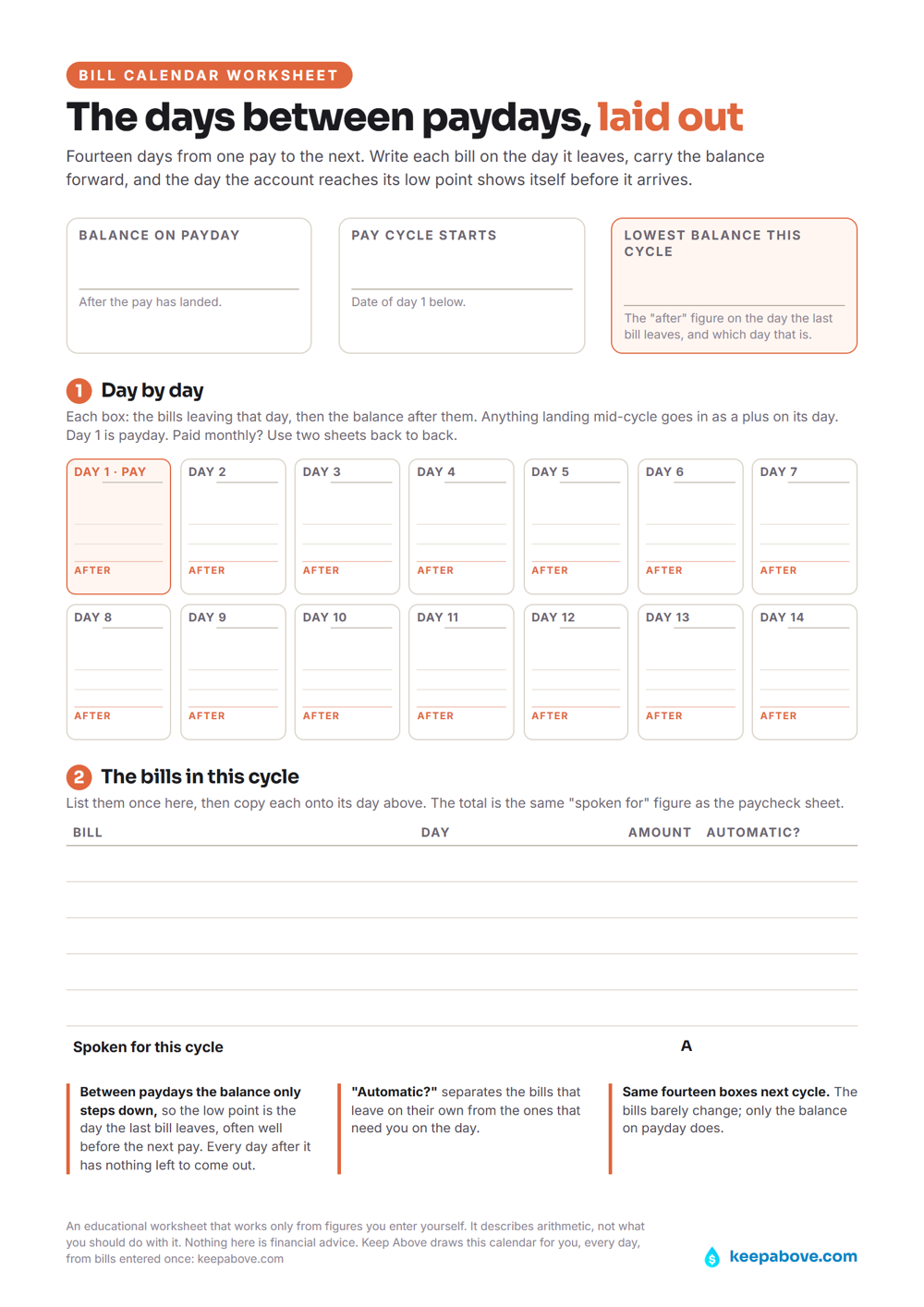
Fourteen boxes from one payday to the next. Each bill goes in the box for the day it leaves the account, and the balance after it is carried forward to the next day. Paid monthly? Two sheets back to back.
The figure the sheet is for is the lowest balance of the cycle and which day it lands on. Between paydays the balance only steps down, so the low point is the day the last bill leaves, often well before the next pay. That is the day worth knowing about before it arrives rather than after. Anything landing mid-cycle goes in as a plus on its day.
Which bills leave on their own, and which need you on the day?
The bill list underneath is the same "spoken for" total as the paycheck sheet, with one extra column: whether each bill leaves on its own or needs you on the day. Keep Above draws this calendar for you, every day, from bills entered once.
The reasoning behind it is in the blog: Payday to payday. The other two worksheets are on the worksheets page.
Common questions
How do I make a bill calendar for my pay cycle?
One box per day from one payday to the next, with each bill written in the box for the day it leaves the account and the balance carried forward to the next day. The printed sheet has fourteen boxes; on monthly pay, two sheets run back to back.
Which day of the pay cycle is my balance at its lowest?
Usually the day the last bill leaves, which is often well before the next pay. With nothing arriving mid-cycle the balance only steps down, so the low point sits at the end of the run of bills rather than at the end of the cycle. The calendar shows which day that is.
Where does money arriving mid-cycle go on the sheet?
In as a plus on the day it lands. The running balance then carries that figure forward like any other line, so the low point is worked out from what actually sits in the account on each day rather than from the bills alone.
Why does the sheet ask whether a bill leaves on its own?
Because a bill that leaves on its own and a bill that needs you on the day are different jobs, even though both come out of the same balance. The list underneath the calendar carries one column for that, so the days that need something from you are visible before they arrive.
What if I am paid monthly rather than fortnightly?
Two sheets back to back. The fourteen boxes cover one fortnight, so a monthly cycle runs across two of them with the closing balance of the first carried into the second. The arithmetic does not change with the length of the cycle.
Does Keep Above draw this calendar for me?
Yes. Bills and income entered once are drawn onto a calendar day by day, and the free tier includes the calendar view along with one budget, bill and income tracking, and savings goals. The printable sheet is the same arithmetic done by hand.
Keep Above is an educational planning tool that works only from the figures you enter yourself. The worksheet describes arithmetic, not what to do with it. It doesn't hold, move or access your money, and nothing here is financial advice.